

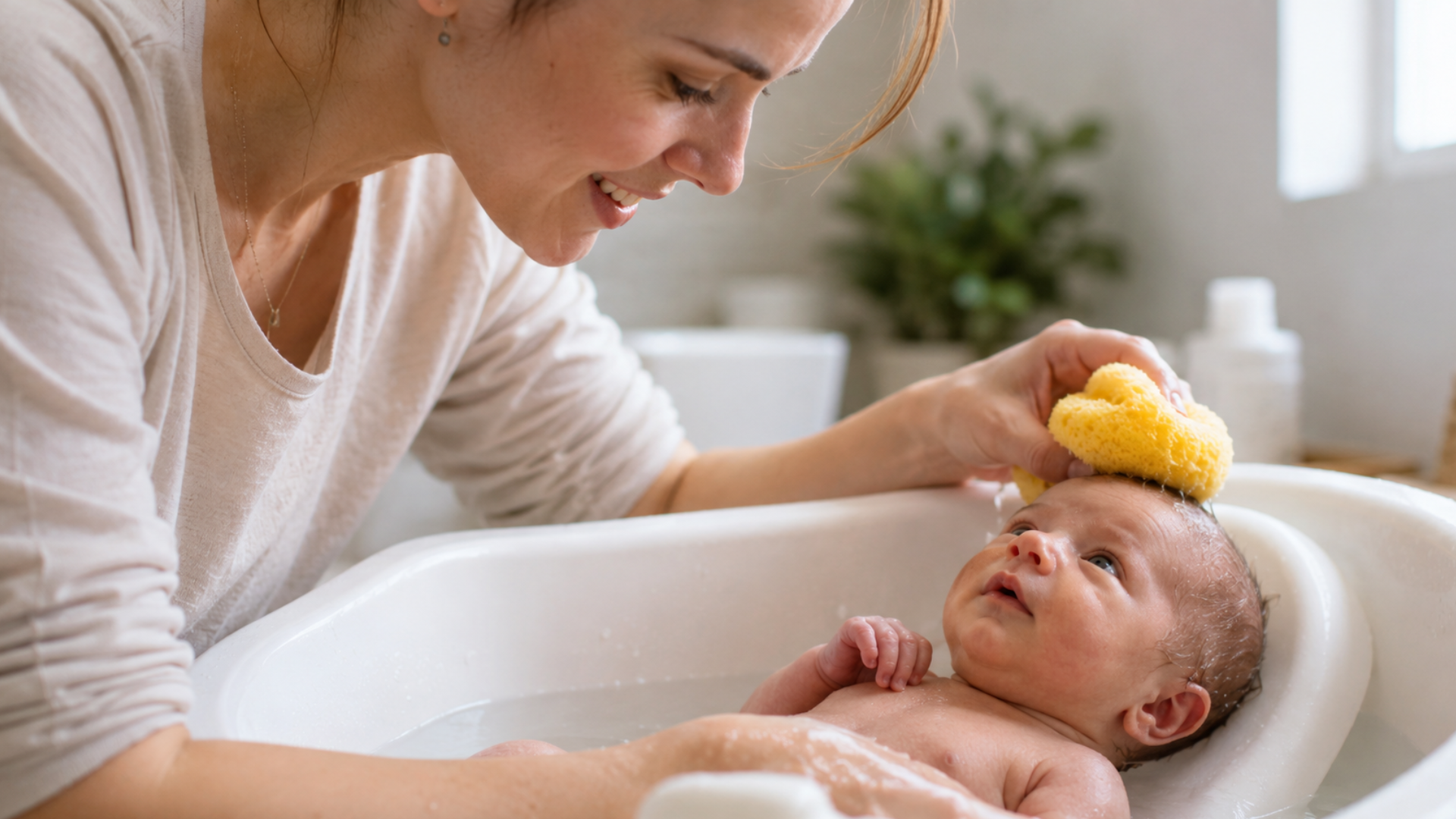
A newborn’s skin is much more delicate than adult skin, which is why many experts recommend delaying the first bath for at least 24 hours after birth. Research has shown that waiting can help babies regulate their body temperature more easily, support bonding, and protect the natural white coating on their skin called vernix, which acts like a built-in moisturizer and protective barrier.
That surprises a lot of new parents because it can feel like babies need frequent baths to stay clean. In this guide, we’ll explain how often to bathe newborn babies, when they actually need a bath, and what parents should know about things like the umbilical cord, winter weather, dry skin, and eczema.
When to Bathe a Newborn for the First Time

Many hospitals now recommend waiting at least 24 hours before doing an infant first bath [health.clevelandclinic.org]. Some parents even choose to wait a little longer so the baby’s skin has more time to adjust naturally after birth.
One reason for this is the vernix, which is the soft white coating many babies are born with. While it may look like something that needs to be cleaned off immediately, vernix actually helps protect a newborn’s skin. It works almost like a natural moisturizer and barrier, helping prevent dryness while the skin adapts to the outside environment.
Delaying the first bath may also help babies stay warm more easily and avoid unnecessary skin irritation during those first days. Until then, parents usually just clean areas like the face, diaper area, and neck folds when needed.
How Often to Bathe a Newborn in the First Week
During the first week, most newborns only need about 2-3 baths. Newborn babies do not sweat much, crawl around, or get exposed to dirt the way older babies and toddlers do, so daily baths are usually unnecessary.
When it comes to how often to bathe newborns, the focus is normally on keeping the baby comfortable and clean without drying out their skin. Bathing too often can remove natural oils that help protect delicate skin, which may lead to dryness, peeling, or irritation.
Many parents also stick to fewer baths while the umbilical cord stump is still attached. Keeping the area dry can support proper healing, which is why sponge baths are often recommended at this stage instead of fully submerging a baby in water.
Why You Shouldn’t Bathe a Newborn Every Day
Apart from protecting your baby’s delicate skin and natural oils, bathing a newborn too often can also lead to a few other problems parents may not realize at first.
Some babies may experience:
- Dry, flaky skin that becomes rough or irritated
- More fussiness after baths because frequent bathing can be overstimulating for some newborns
- Difficulty staying warm, especially during colder months, since newborns lose body heat quickly
- Skin redness or sensitivity from repeated exposure to water, soap, or bath products
- Faster moisture loss, which can make conditions like eczema worse in some babies
- Irritation around the umbilical cord stump if the area stays damp too often
Sponge Bath Newborn – When and How
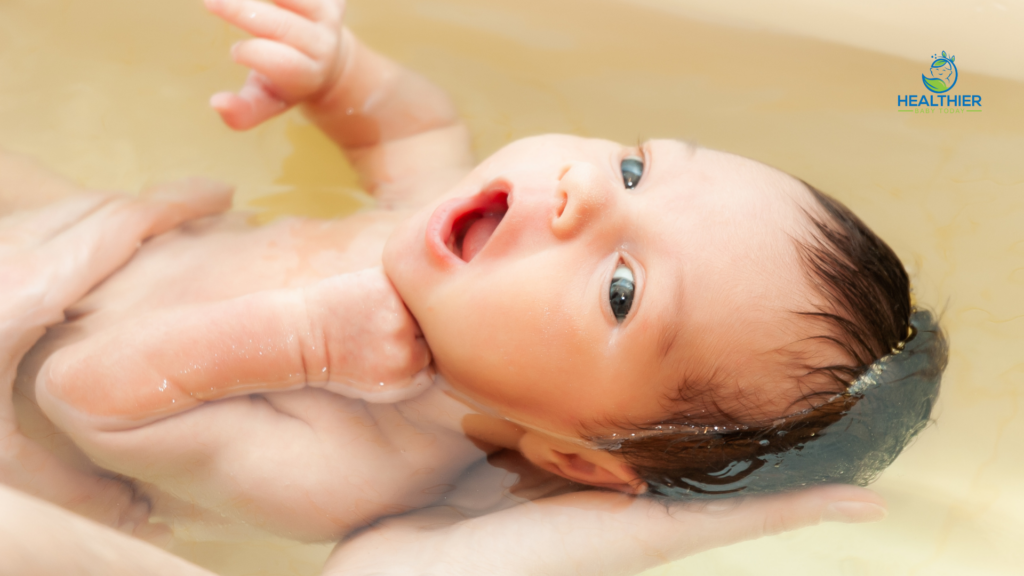
A sponge bath is different from a regular baby bath because your newborn is not placed directly into a tub of water. Instead, parents use a soft washcloth or sponge with warm water to gently clean certain parts of the baby’s body while keeping the rest of the body dry [kidshealth.org].
This type of bath is usually recommended during the early newborn stage, especially before the umbilical cord stump falls off. Many parents choose sponge baths during this time because constantly soaking the cord area can slow healing or increase irritation.
When deciding when to bathe newborn babies using a sponge bath, most parents only do this a few times per week unless the baby gets messy from spit-up, diaper leaks, or milk dribbles.
During a sponge bath, parents normally focus on:
- the face
- neck folds
- hands
- diaper area
- behind the ears (avoid cleaning inside the ears)
The goal is not to fully wash the baby every day, but rather to keep them clean and comfortable while protecting their sensitive skin and healing the umbilical cord area.
If you notice a diaper rash, this is how to take care of it.
Can You Bathe a Newborn with an Umbilical Cord?
Yes, you can still bathe a newborn while the umbilical cord stump is attached, but most healthcare providers recommend sticking to sponge baths instead of fully submerging your baby in water.
The main goal during this stage is to keep the cord area as dry and clean as possible so it can heal naturally and fall off on its own. In many babies, this happens within 1-3 weeks after birth.
To help care for the umbilical cord stump:
- Gently pat the area dry if it gets wet
- Avoid soaking the stump in bath water
- Fold the diaper slightly below the cord to keep urine away from it
- Do not pull on the stump, even if it looks loose
- Avoid lotions, powders, or harsh products around the area unless advised by your doctor
Parents should also watch for signs of infection, including redness spreading around the cord, swelling, a bad smell, or discharge.
How Often to Bathe a Newborn in Winter vs Other Seasons
The weather and temperature around your baby can sometimes affect your baby’s bathing routine. During colder months, many parents choose to bathe their newborn less often because babies lose body heat quickly and their skin may become drier more easily [pubmed.ncbi.nlm.nih.gov]. In warmer weather, some babies may need a little more cleaning because of sweat, milk dribbles, or heat rashes.
Even then, newborns still usually do not need daily baths. When thinking about how often does a newborn need to be bathed, it often comes down to your baby’s skin, comfort, climate, and how messy they get between baths.
| Season | Typical Bathing Routine | Why Parents May Adjust Baths |
| Winter | Around 2 times per week | Cold air and indoor heaters can dry out a baby’s skin faster |
| Summer | 2-4 times per week if needed | Sweat, heat, and spit-up may make babies feel sticky more often |
| Mild/Moderate Weather | About 2-3 times per week | Usually enough to keep newborns clean without over-drying the skin |
| Very Dry Climates | Fewer baths with extra moisturizing | Helps reduce irritation, peeling, and moisture loss |
| Humid Climates | Slightly more wipe-downs between baths | Helps manage sweat and skin folds without needing full baths daily |
How Often to Bathe a Newborn with Eczema
Babies with eczema often need a slightly different bathing routine because their skin loses moisture more easily. While parents sometimes think skipping baths completely is best, the goal is usually to keep baths short, gentle, and moisturizing rather than avoiding them altogether.
Many healthcare providers recommend bathing newborns with eczema around two to three times per week unless your doctor suggests otherwise. Using lukewarm water, fragrance-free products, and applying moisturizer shortly after the bath can help reduce dryness and irritation.
Parents should also pay attention to how their baby’s skin reacts after baths. If the skin looks more red, flaky, or irritated afterward, it may help to shorten bath time, reduce soap use, or moisturize more frequently.
When to Start Bathing Baby Daily
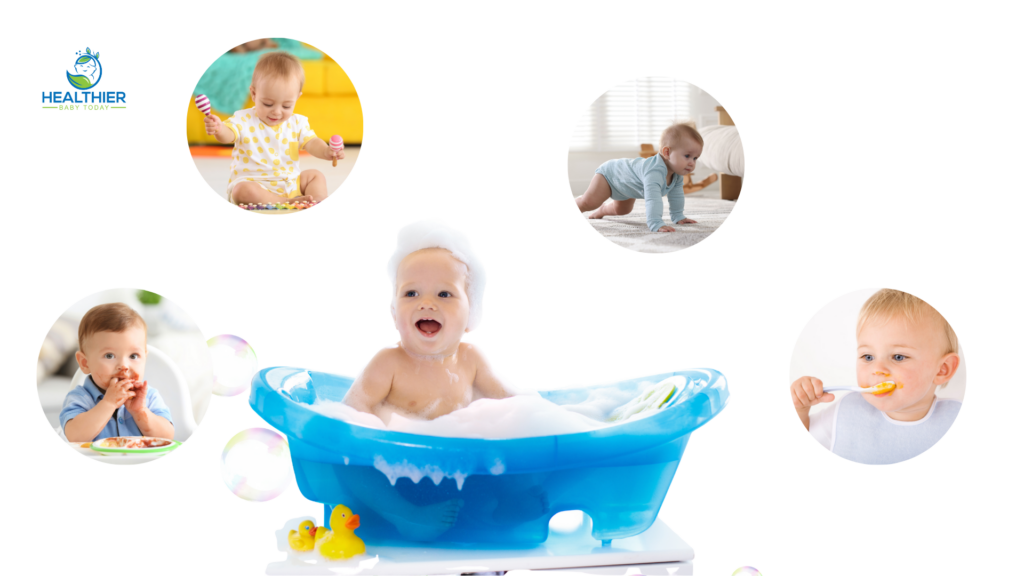
Most babies do not need daily baths during the newborn stage. In many cases, parents only begin bathing their baby every day once they are a few months older, especially after they become more active, start eating solids, crawl around, sweat more, or get messy more often throughout the day.
For some families, daily baths also become part of a calming bedtime routine around the 3- to 6-month stage. However, this does not always mean using soap every night. Some parents simply use warm water on certain evenings to help their baby relax before sleep.
There is no exact age at which every baby suddenly needs daily baths. Some babies with dry or sensitive skin may still do better with fewer baths even as they grow older [babycentre.co.uk]. The most important thing is watching how your baby’s skin reacts and adjusting the routine if you notice dryness, redness, or irritation.
Signs You’re Bathing Your Baby Too Often
Some babies handle frequent baths better than others, but there are a few signs that may suggest it is time to cut back on how often you bath baby during the newborn stage.
Common signs can include:
- dry or flaky skin
- redness after baths
- rough patches on the skin
- worsening eczema or irritation
- fussiness during or after bath time
- peeling skin that seems to get worse instead of better
If you notice these signs, it may help to:
- reduce baths to a few times per week
- keep baths shorter
- use lukewarm instead of hot water
- avoid heavily fragranced soaps or products
- apply a gentle baby moisturizer after baths
- focus more on wipe-downs between baths instead of full baths every day
In many cases, small changes to the bathing routine are enough to help a baby’s skin feel more comfortable again.
Conclusion: Don’t Ignore Signs of Eczema
During the newborn stage, less is often more when it comes to bath time. Most babies only need a few baths per week, especially during the first days after birth, while their skin, umbilical cord area, and natural protective oils are still adjusting.
Understanding how often to bathe newborn babies is not really about following a strict schedule. It is more about paying attention to your baby’s skin, comfort, climate, and individual needs. Some babies may need slightly more cleaning because of spit-up or heat, while others do better with fewer baths to avoid dryness and irritation.
As your baby grows, becomes more active, and starts getting messier, bathing routines will naturally change. Until then, gentle care, short baths, and keeping your baby comfortable are usually more important than bathing every day.
And if cutting down on the frequency of your bath is still not working for your little one, they might have eczema.
FAQs
Is it okay to bathe a newborn once a week?
Yes, in some cases, it can be okay to bathe a newborn once a week, especially during the very early newborn stage, as long as parents keep areas like the face, neck folds, hands, and diaper area clean between baths. However, most healthcare providers recommend around two to three baths per week for many newborns. When deciding how often to give newborn bath routines, it often depends on your baby’s skin, climate, and how messy they get during the day.
When to start daily baths for babies?
Many parents start daily baths when their baby is a few months older and becoming more active, sweaty, or messy from crawling and eating solids. For others, daily baths become part of a bedtime routine rather than something done purely for hygiene. Daily baths are not required for every baby, especially if they have dry or sensitive skin.
How long can a baby go without a bath?
A healthy newborn can usually go several days without a full bath as long as important areas are cleaned regularly. Babies do not sweat heavily or get dirty the same way older children do, which is why frequent bathing is often unnecessary during the newborn stage.
What are the signs that a bath is too frequent?
Signs that a baby may be getting bathed too often can include dry skin, redness, irritation, peeling, rough patches, or worsening eczema. Some babies may also become fussy after frequent baths if their skin feels uncomfortable or overstimulated.
OUR REVIEW PROMISE
Evidence-based, clearly reviewed.
Healthier Baby Today articles are reviewed for accuracy and updated as guidance changes.
Last updated: July 21, 2026

