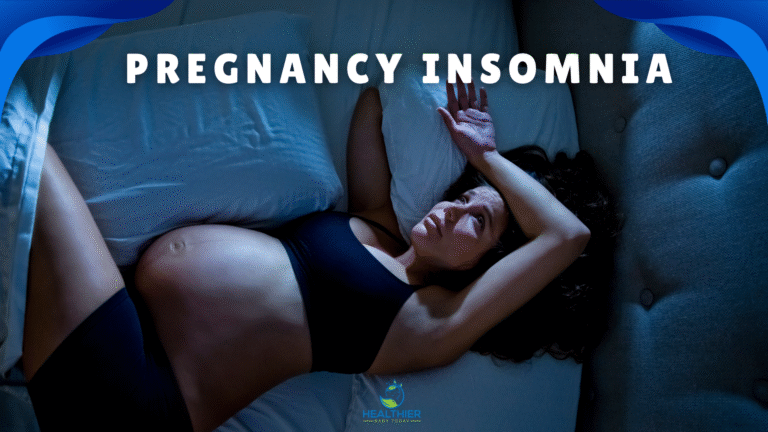

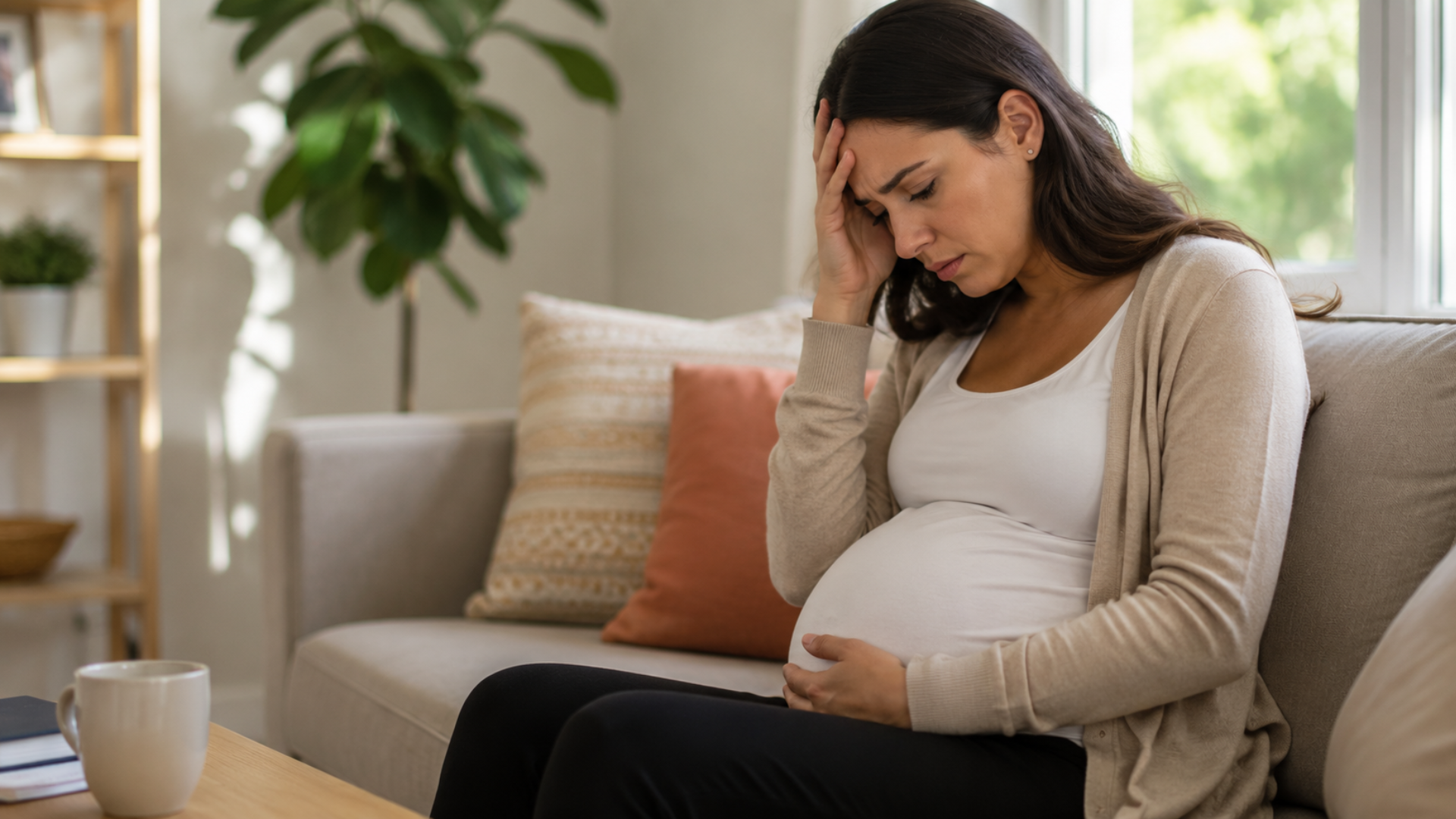
You are staring at the ceiling. It is 3:00 AM. Again.
Your mind is racing through a loop of “what ifs.” What if the baby isn’t moving enough? What if that turkey sandwich I ate three weeks ago hurts the baby? What if I’m not ready for labor?
If this sounds familiar, you are not alone. While everyone talks about “the glow,” many women silently struggle with pregnancy anxiety. It is the uninvited guest that shows up right when you are trying to celebrate.
But where is the line? How do you know if you are just a worried parent-to-be or if you are dealing with something that requires help?
What Is Pregnancy Anxiety?

It’s an intense worry or fear related to your pregnancy or the health of your baby.
According to experts at Brown University Health, worry is a normal part of the process [brownhealth.org]. You are undergoing a massive life change. Your hormones are fluctuating wildly. It makes sense that you feel on edge.
However, anxiety in pregnancy becomes a problem when it starts to take over your life. If your worries are stopping you from sleeping, eating, or functioning at work, it is time to pay attention.
Pregnancy Anxiety Symptoms
Anxiety is not just in your head. It is in your body too. You might experience physical symptoms that can be confusing because they often mimic pregnancy symptoms.
Watch for these signs:
- Racing thoughts: You cannot turn your brain off, especially at night.
- Physical restlessness: You feel jittery or unable to sit still.
- Panic attacks: Sudden episodes of intense fear, rapid heartbeat, or shortness of breath. These are often classified as anxiety panic attacks during pregnancy.
- Changes in appetite: Eating way more or way less than usual.
- Difficulty concentrating: You feel foggy or distracted constantly.
What Causes Anxiety During Pregnancy?

There is no single switch that turns anxiety on. It is usually a combination of things.
Hormones play a huge role. Progesterone and estrogen levels soar during pregnancy, which affects the neurotransmitters in your brain that regulate mood.
Past experiences matter too. If you have experienced a previous miscarriage or fertility struggle, anxiety during pregnancy is almost expected. You are waiting for the other shoe to drop.
Anxiety During Pregnancy by Trimester
Your worries will likely shift as your belly grows.
Pregnancy Anxiety in the First Trimester
The first few months are often the hardest for anxious moms. The risk of miscarriage is highest here, and you likely do not look pregnant yet. You might not feel the baby move. The uncertainty can be paralyzing.
Pregnancy Anxiety in the Second Trimester
This is often called the “golden period,” but it has its own stressors. You have the anatomy scan, where you hold your breath, hoping the doctor says, “Everything looks perfect.” You might also start worrying about body image as you begin to show.
Pregnancy Anxiety in the Third Trimester
As the due date gets closer, the focus shifts. Fears about labor, delivery, and actually bringing a baby home kick in. You might worry about pain, complications, or how your relationship with your partner will change.
Is Pregnancy Anxiety Dangerous?
Untreated, high levels of stress can impact your health.
Research suggests that severe, untreated anxiety is associated with a higher risk of preterm birth and low birth weight [nature.com]. It can also make the postpartum period much harder. Treating your anxiety is not just for you. It is for your baby, too.
Pregnancy-Safe Anxiety Medication Options
Many women assume they have to suffer in silence because they cannot take meds. This is false.
There are anxiety meds safe for pregnancy. You should never stop or start medication without a doctor’s supervision, but you have options.
Selective Serotonin Reuptake Inhibitors (SSRIs) are the most commonly prescribed anxiety drugs during pregnancy. Doctors often look at the risk-benefit analysis. Does the risk of the medication outweigh the risk of untreated, severe anxiety on the fetus?
While we cannot provide a medical list of anxiety medications safe during pregnancy, common discussions with your doctor might include Sertraline (Zoloft) or Citalopram (Celexa). Your provider will help you find the lowest effective dose.
Top Herbal Remedies To Try

If you prefer a natural route or your anxiety is mild, you might look for herbal remedies for anxiety during pregnancy.
- Chamomile Tea: generally considered safe in moderation and can be calming.
- Lavender: Aromatherapy is a powerful tool. A few drops in a diffuser can help ground you.
- Lemon Balm: Often used for stress, but check with your provider first.
Note: Always consult your OB-GYN before taking any supplements, as “natural” does not always mean safe for the baby.
Pregnancy Anxiety Support Groups
You need a village. Talking to your partner is great, but talking to other pregnant women who “get it” is better.
Look for local groups in your area or ask your hospital if they offer prenatal support circles. Organizations like Postpartum Support International (PSI) also offer online support groups specifically for mood disorders during pregnancy.
Where to Find Online Courses for Managing Pregnancy Anxiety and Stress
If you want structured help from home, digital tools are a lifesaver.
- Hypnobirthing Courses: These aren’t just for labor. They teach deep relaxation techniques you can use right now.
- Mindfulness Apps: Apps like Headspace or Calm often have specific pregnancy packs.
- CBT Programs: Cognitive Behavioral Therapy is the gold standard for anxiety. You can find therapists who offer tele-health sessions to help you reframe those scary thoughts.
Anxiety After Pregnancy (What They Don’t Tell You)
Anxiety after pregnancy, also known as Postpartum Anxiety (PPA), is just as real as Postpartum Depression, but it’s talked about far less. It often shows up as constant worry that doesn’t fade after birth. You may feel on edge all the time, struggle to relax, or find your thoughts circling around your baby’s safety, health, or well-being. Even when everything is going well, your mind may jump to worst-case scenarios.
For some parents, this anxiety becomes overwhelming. It can lead to obsessive thoughts, repeated checking, trouble sleeping, or a feeling that you must stay alert at all times. This isn’t you being “overprotective”, it’s a sign that your nervous system is stuck in high gear.
If your worry doesn’t ease with time, or if it starts interfering with your daily life, it’s important to speak up. You don’t have to white-knuckle your way through motherhood, and you don’t have to handle this alone.
When to Talk to Your Doctor About Pregnancy Anxiety

You should book an appointment if:
- You are having panic attacks.
- You cannot sleep even when you are exhausted.
- You feel detached from the baby.
- You have thoughts of harming yourself.
Harvard Health notes that there are treatments available that may or may not involve medication, depending on your individual situation [health.harvard.edu]. The most important step is opening the door to that conversation.
Conclusion: Getting Help Makes You Stronger
Your mental health is just as important as your physical health. You take vitamins for the baby’s bones. You go to checkups for the baby’s growth. Taking care of your mind is part of being a good mother.
Take a deep breath. You are doing a good job.
FAQs
How can I control my anxiety during pregnancy? Focus on what you can control. Prioritize sleep, eat balanced meals, and move your body gently. Limit your Google searches. If the worry feels unmanageable, therapy and pregnancy safe anxiety meds are valid and helpful tools.
What does anxiety feel like while pregnant? It feels like a constant hum of worry in the background. Physically, it can feel like a racing heart, shallow breathing, tightness in the chest, or a stomach that is always in knots.
Which prenatal vitamins also help reduce anxiety symptoms during pregnancy? Magnesium is the star player here. Many women find that a magnesium supplement helps with sleep and muscle tension, which can lower anxiety. Vitamin D and B-complex vitamins also play a role in regulating mood. Always clear new supplements with your doctor.
Are there any apps designed to manage pregnancy anxiety effectively? Yes. Apps like Expectful are designed specifically for meditation during pregnancy. General mental health apps like Sanvello or Headspace are also excellent for learning coping mechanisms for stress.
OUR REVIEW PROMISE
Evidence-based, clearly reviewed.
Healthier Baby Today articles are reviewed for accuracy and updated as guidance changes.
Last updated: July 21, 2026